Around The Corner
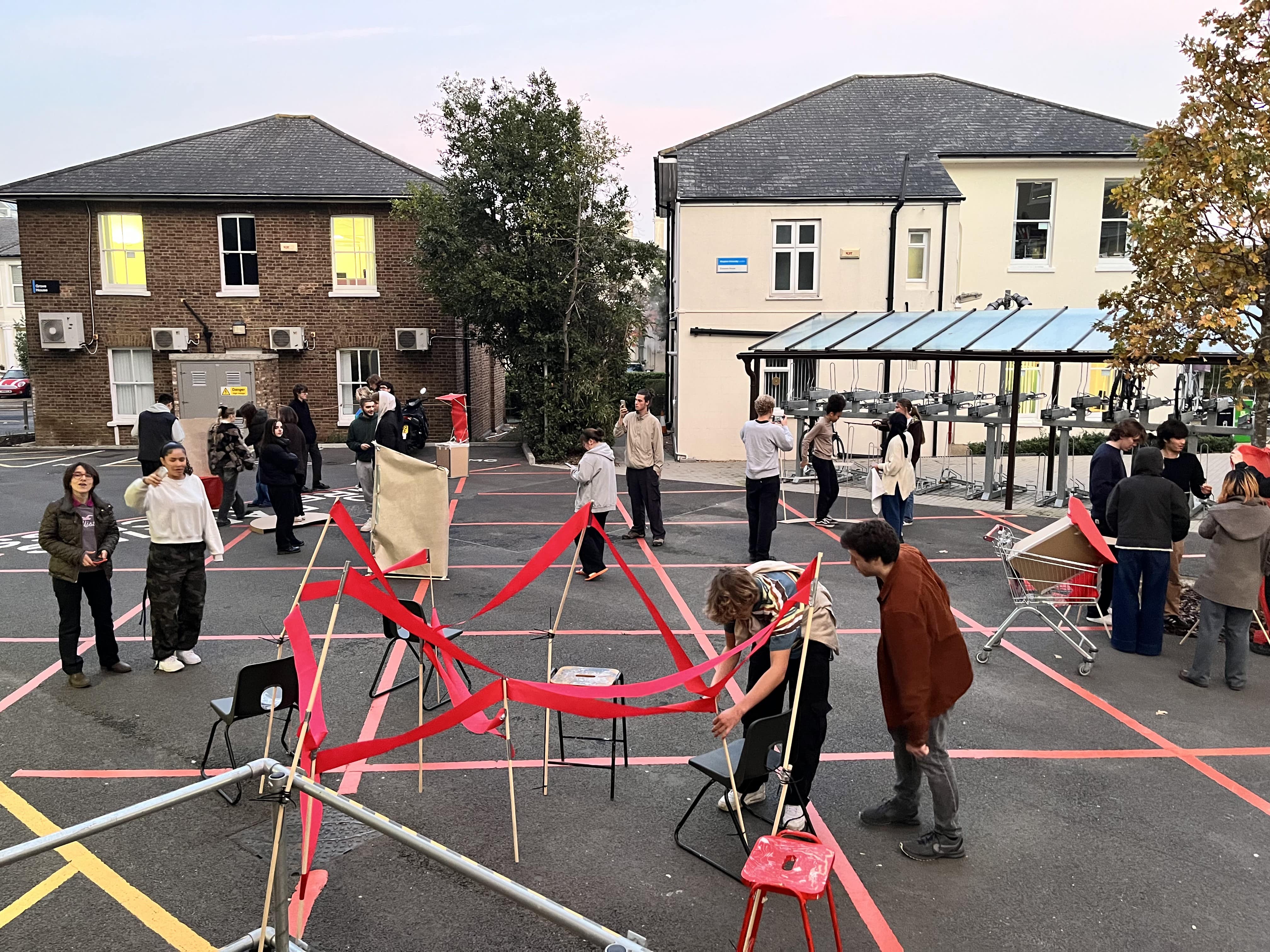
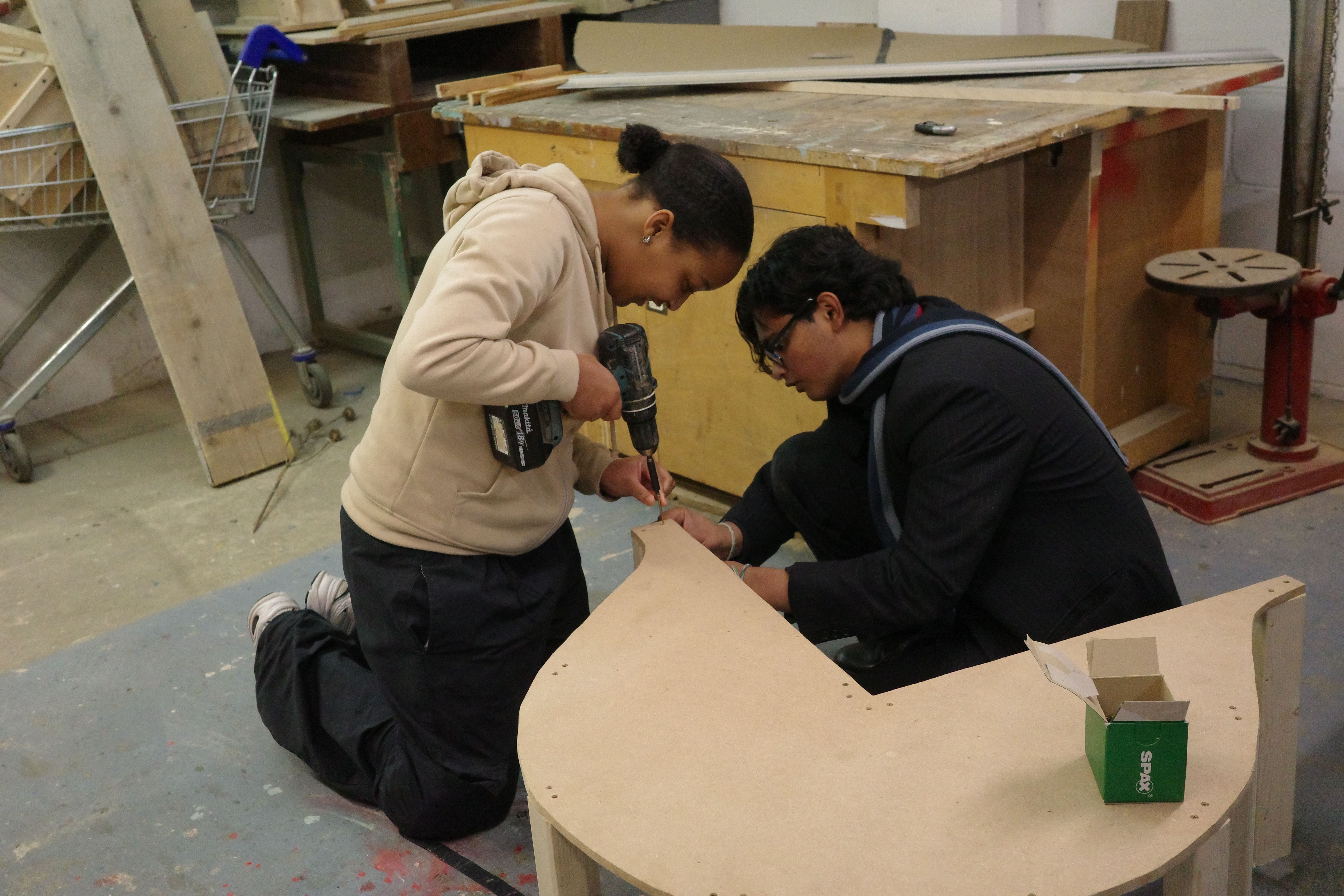
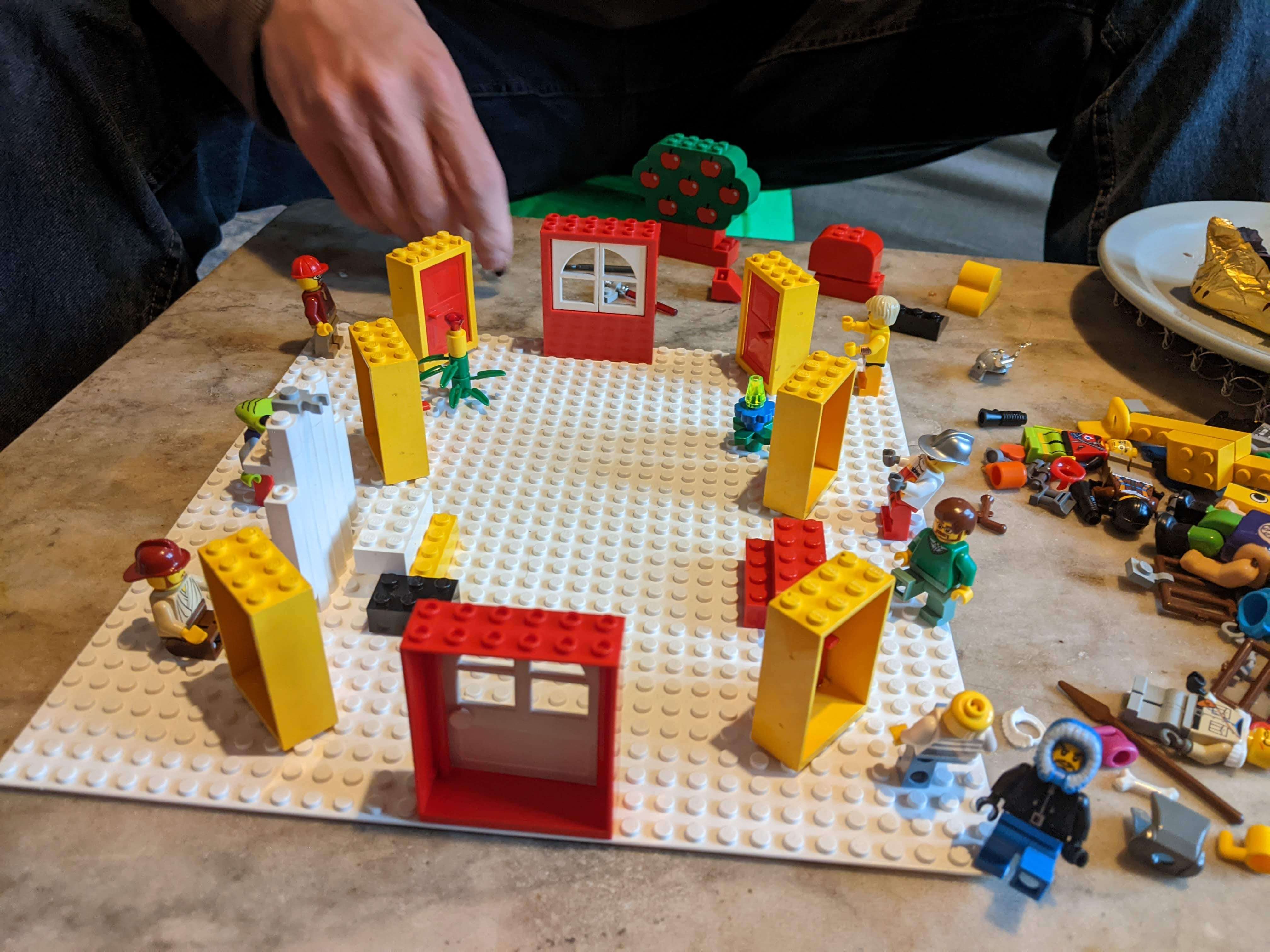
Around the Corner is a research and design project that gets young people engaged in the design of their local built environment, through a series of hands-on workshops. These workshops utilised bespoke methods that forge a link between the tacit and embodied knowledge young people already have of their public spaces, and a finalised design for new public seating in Peckham. This project was funded by UAL's Challenge Lab.
The most interesting thing I've learned from this Project:
Victor and I approached the project with the assumption that if we gave teenagers control over their public spaces, they would naturally create the most suitable spaces for themselves. But in actual fact, the teenagers we worked with focused more on having the most multi-purpose space, that suited all needs. Not only this, but framing a place as 'for teenagers' made it immediately unappealing for them. While it's not bad thing for a space to be multi-purpose. However, since we wanted to challenge the active exclusion of young people from public spaces, it became a quandry for us. This is how we ended up focusing more on embodied tacit knowledge, emphasising their lived experience of their urban environment.
One thing I'd do differently now:
We had budget and time restrictions which meant we could only focus on a small area of Peckham, with a small group. If I could do this project again, I would work with more young people. In terms of the workshops, I felt the last 4 were the most satisfying, since we knew we were trying to learn from their experience as well as their thoughts. If I did this project again, I would be more conscious of the difference between these two from the start.
Pono Village, Sindh
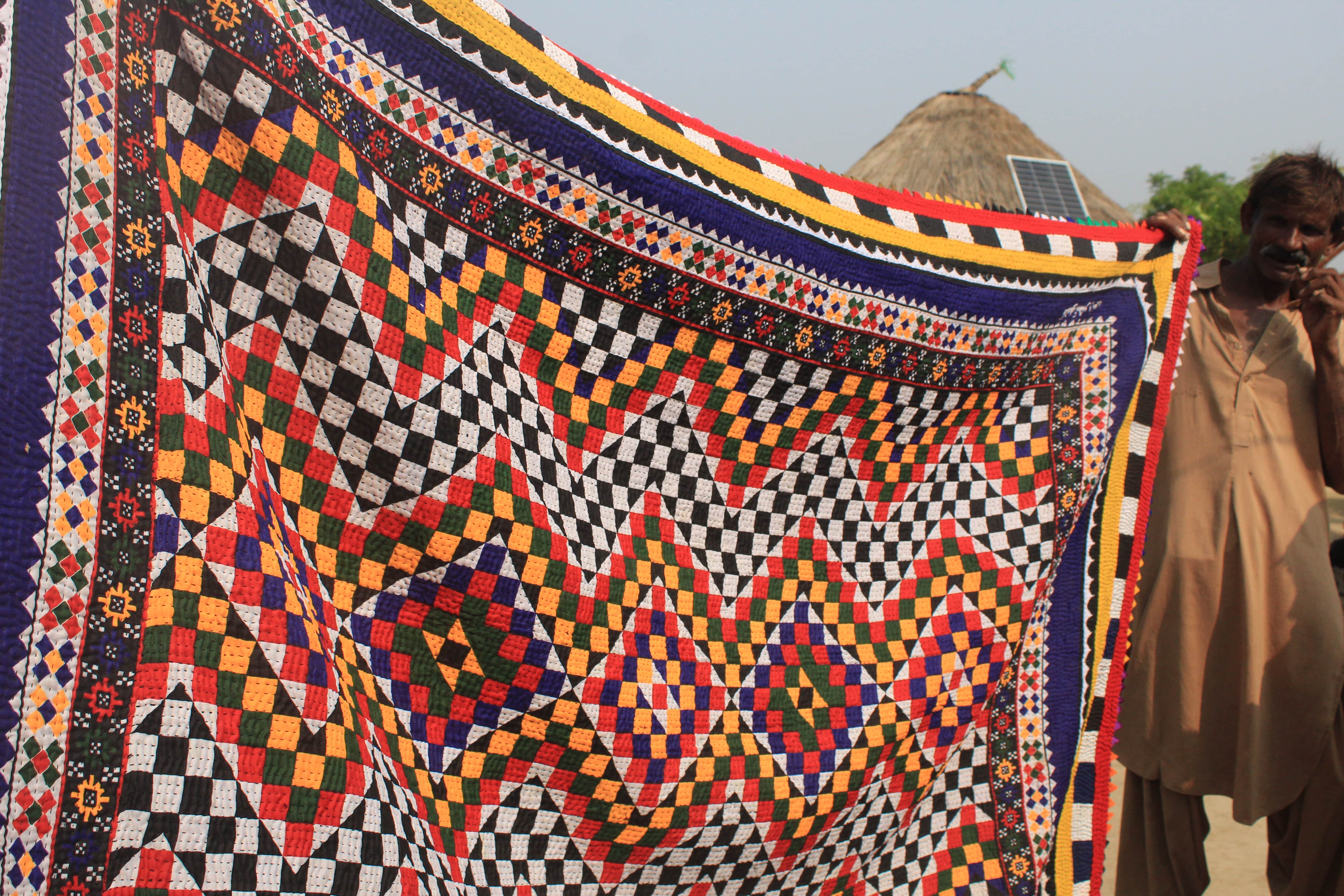
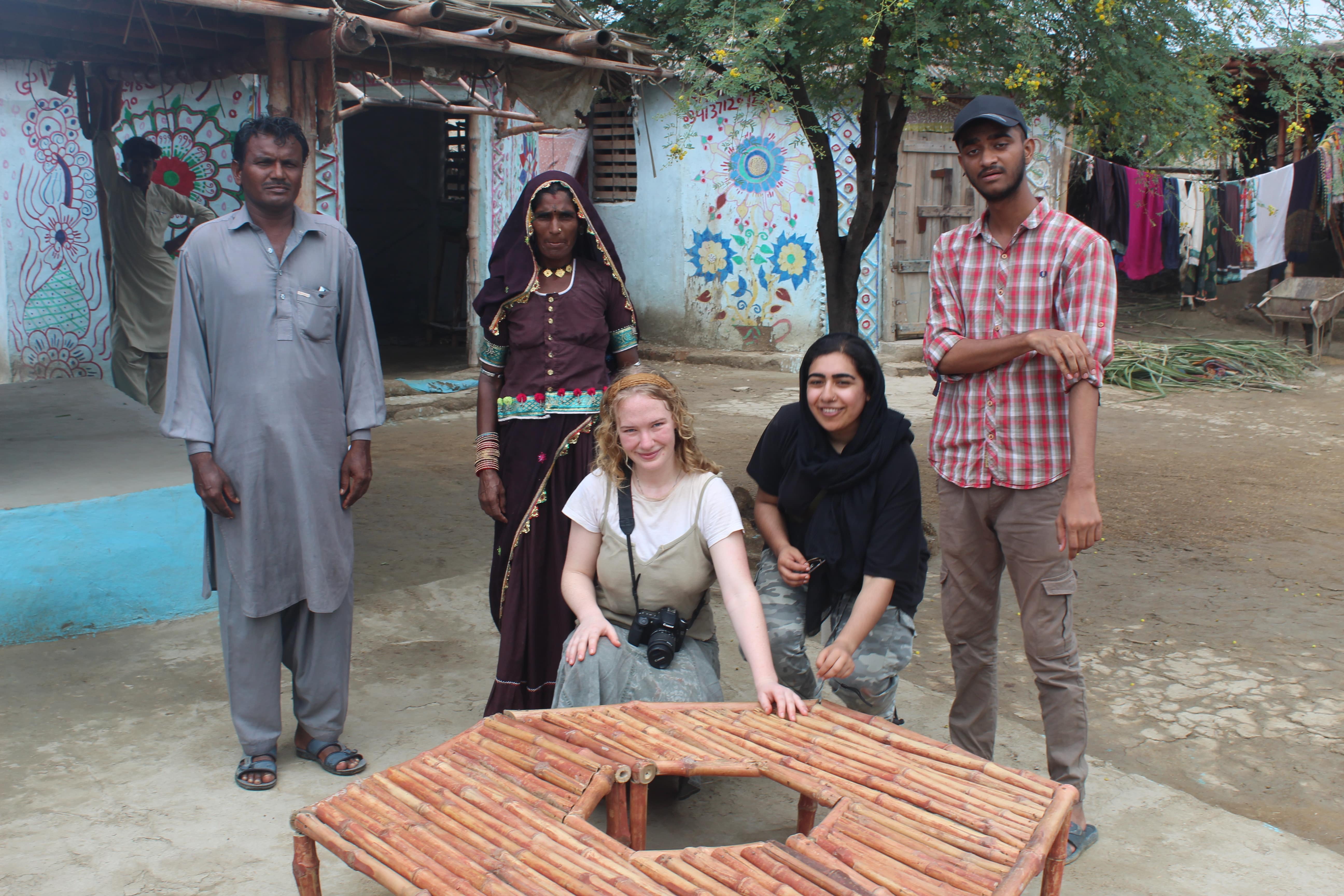
The INTBAU Climate Volunteer program is a collaboration between INTBAU and The Heritage Foundation of Pakistan, headed by architect, Yasmeen Lari. As volunteers, we immersed ourselves in the low carbon construction techniques adopted in the local area. This involved surveying local villages, mapping flood hazards before taking part in workshops, designing and building with earth, lime and bamboo. During my time there, I collaborated with local artisans to create a prototype for a floating structure, designed and created a modular table with local bamboo artisans and experimented with banana leaf concoctions as an alternative to commercial waterproofing agents.
The most interesting thing I've learned from this Project:
The most interesting thing I learned from this experience was seeing firsthand the relationship between the people and these natural materials. The villagers were eager and excited to experiment, and there was a great atmosphere of creativity around the entire village. These materials had proven their worth against concrete and cement in the region, so there was a lot of faith in them, as well as a palpable feeling that this was the future for them. It was really great to feel that energy, especially when the future is almost always linked to technological advancement in the UK.
What if progress and innovation mean going backwards a few steps?
One thing I'd do differently now:
Not to sound repetitive, but definitely more time. Perhaps a couple of months at least in Pono, to really get a feel of everyday life, as well as building those stronger relationships. I'm still in contact regularly with many of the people who live there, but I can't help but wish I could stay and experiment a bit more. I would focus more on materials that aren't being utilised at the moment, such as banana leaves and other waste material. I think learning Saraiki and Sindhi would've helped me more as well, so were I to get the chance to go again, it would be after I took a course and learned the basics, as while I could communicate in Urdu, it felt like a lot was getting lost in translation.
Weaving Nettle Tales
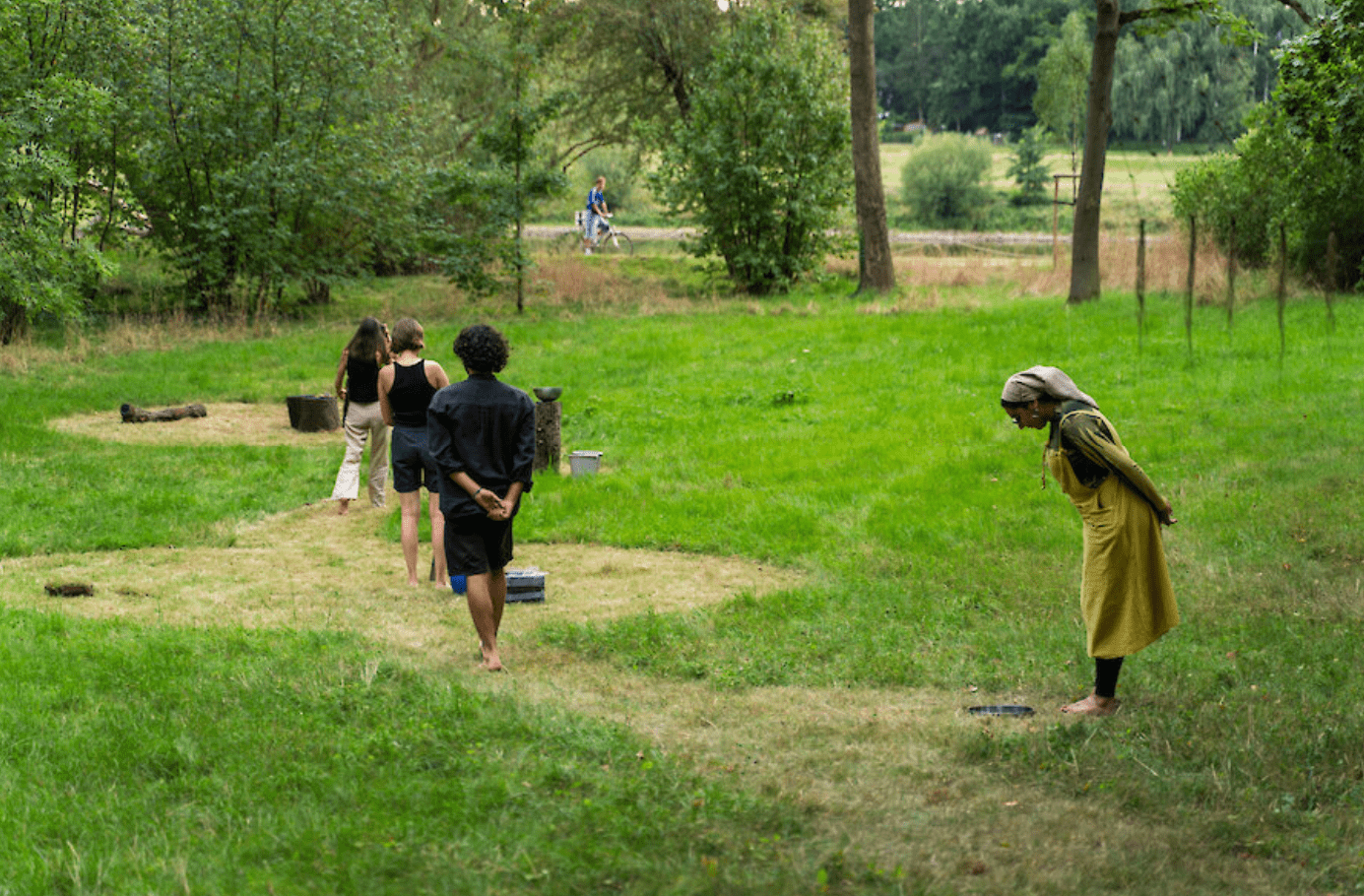
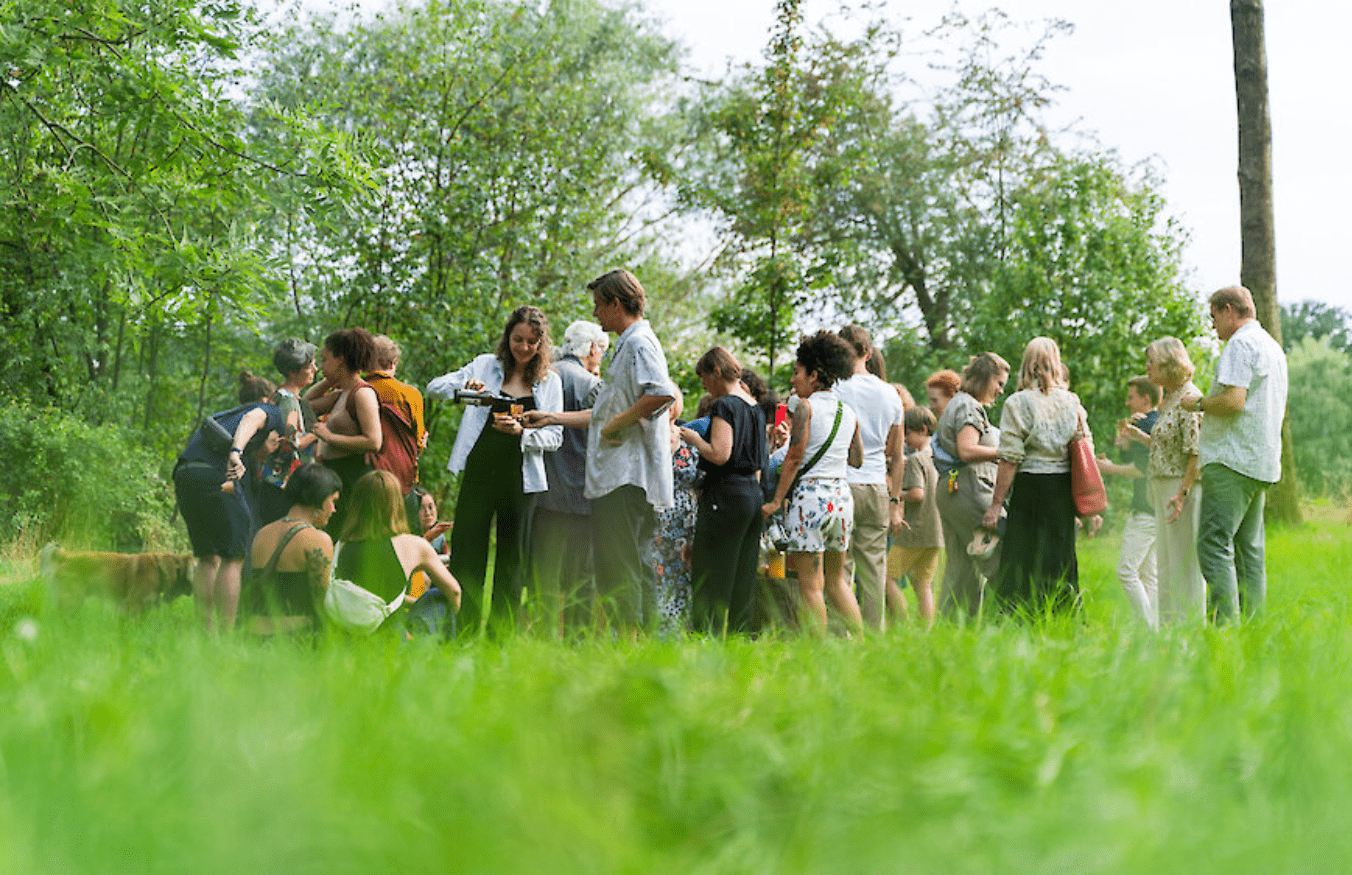
I took part in a two week artist residency with Design Campus Dresden, Germany. There, I explored the use of plants as a natural material, in particular, the use of the nettle. From foraging them on the riverbank, to processing into nettle fibres for nettle rope, and nettle compost, nettle tea and nettle ice cream. This project was an obversation into the reciprocal relationships between humans and the land, with plants as a medium. Nourish the earth, and nourishing our bodies from the earth.
The most interesting thing I've learned from this Project:
Working with natural materials was extremely new to me, and I discovered that there is so much we can use and work with right under our noses. I was taught a lot and I learned a lot from my fellow residents. The most fascinating thing was probably how great nettle ice cream tastes, and how something so common can create an experience so special.
One thing I'd do differently now:
I went in with little knowledge, hoping to learn, and while I did, the breadth of knowledge I was surrounded by ended up making me feel self conscious. I started thinking negatively about how little I understand plants and nature, which led to me adopting an attitude towards them of "I am not knowledgeable enough". I really struggled with these negative emotions, and ironic as it seems, it didn't feel natural. I think this led to me getting far too in my head and thoughts, when actually, doing was the solution. If I did this project again, I would go in with a different mindset. I have more to offer nettles than I thought at the time.
Hello Neighbours
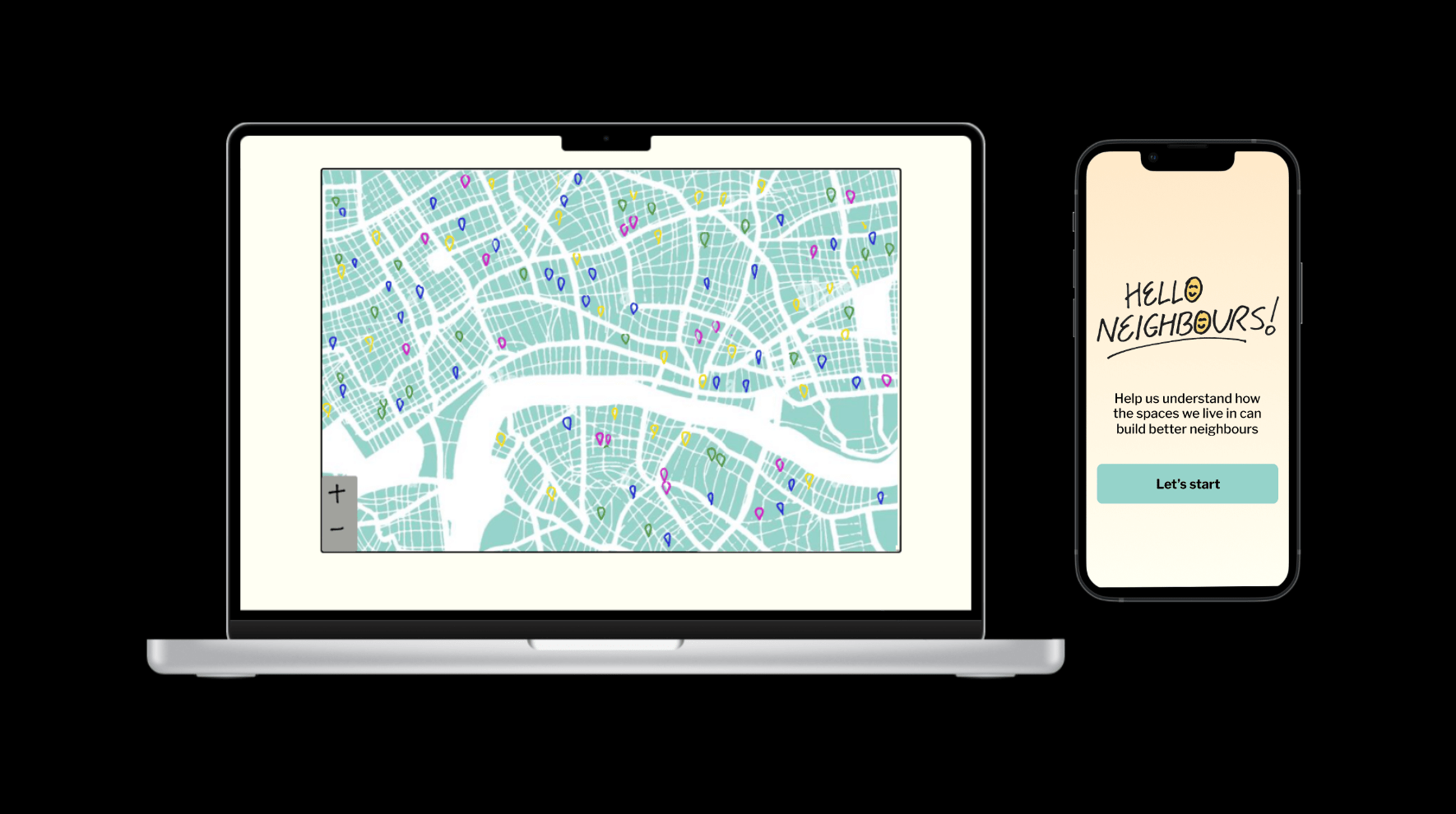
Hello Neighbours! was a product looking at how the configuration of our living spaces, and the in-between spaces of hallways, entryways etc. affect how we interact with our neighbours. We explored whether "neighbourliness" could be designed for in the construction of new apartment buildings. We did this setting out guidelines and definitions for what "neighbourliness" constitutes, and how it could be measured. The intervention culminated in these guidelines, alongside a prototype for a website that would display the churn rate and "neighbourliness" level of a specific postcode, submitted by homeowners and renters in the area.
The most interesting thing I've learned from this Project:
Thinking about "neighbourliness" as a measurable metric. How close you feel to your neighbours is such a subjective feeling, that it felt like an impossible task. Perhaps it is! But during our research , we saw some common threads from people from similarly structured buildings e.g. council flats. It made me understand that the environment I live in has a greater impact on the value and quantity of social interaction I have regularly. Additionaly, I read Hannu Ruonavaara's "Anatomy of Neighbour Relations" (2021) during my research, which really set out an interesting framework - there are different levels of neighbouring, and each is based on scenarios where you would have to trust your neighbour, as opposed to frequency of contact. This was really fun to read in the context of our interviews, I highly recommend it.
One thing I'd do differently now:
I think we were too focused on this being a kind of service or tool. It ended up feeling a bit unnecessary, and not doing much more than raising awareness about the relationships you have with your neighbours. I would like to work more with a housing developer and the residents of its builds, exploring how effective a neighbourliness metric would be for the housing market.
Sara and the Mysterious Hacker Club
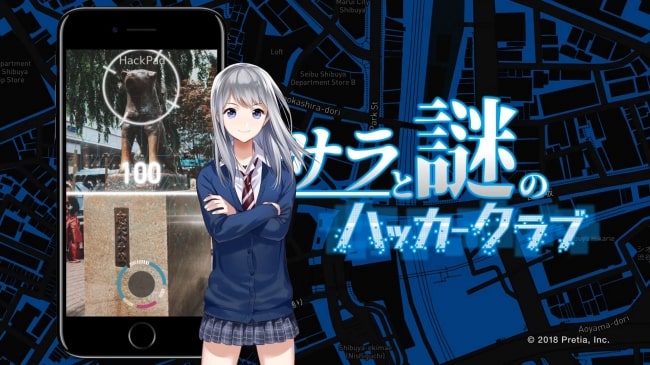
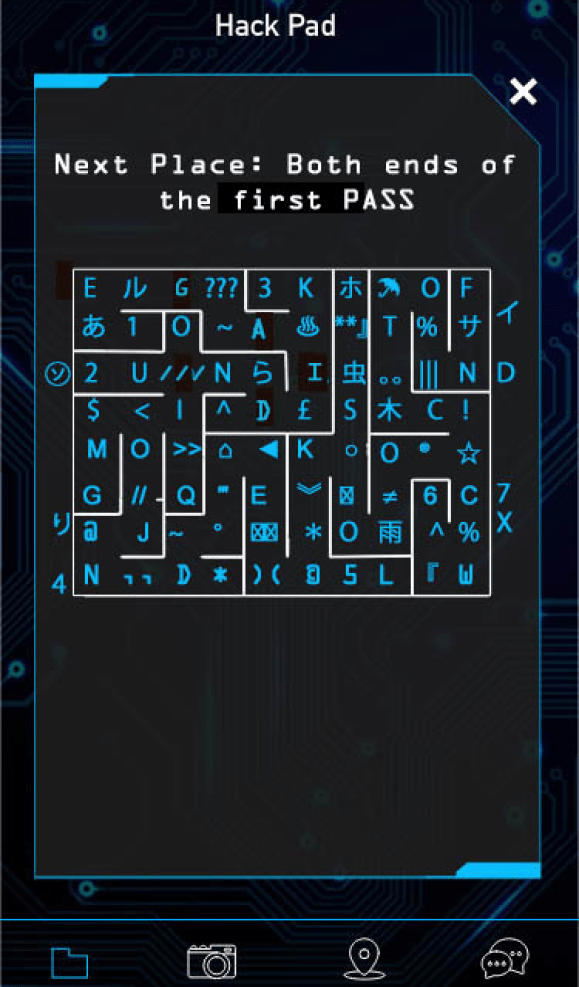
Sara and the Mysterious Hacker Club is the first offering from AR developer, Pretia Inc. You play as a hacker, enlisted by the high schooler, Sara, to defuse bombs in and around Shibuya. Using a mix of app, real space and AR, you have to solve puzzles similar to Professor Layton to protect Shibuya! What's really fun about the game is that it is non-linear, and as you gain more clues and documents from Sara in the app, the more you have to piece together the solutions and passwords you need. The game has been released in Japanese, as well as its sequel. Pretia Inc. have also developed games for leading franchises in Japan, such as Psycho-PASS, as well as their own AR development platform. As a product management Intern, I localised the game from Japanese into English, and created a rough working prototype to test and measure the feasability of an English version of the game.
The most interesting thing I've learned from this Project:
This project was the one that introduced me to design. I remember discovering the field of puzzle design, and reading all these incredible game design books my seniors lent to me, coming up with a strategy to confuse and mislead players while not making it too difficult. The best part of the process was definitely playtesting, where I created a "paper" version of the game and got to watch as countless people struggled over the puzzles I developed. One guy refused hints for a solid hour! It made me stop and think- "ohh, this kind of player exists too". More accurately, you could say that this was the point I fell in love with learning more about people, players, users, communities.
One thing I'd do differently now:
I definitely faffed around a little bit too much, out of nervousness and shyness. I wasn't confident enough to do intercept interviews at the time, which I now think could have yielded some interesting results ON SITE. The playtesting focused more on the puzzles, but without being in the space you need to be in at that point of this spatial game , I felt that the data I collected, while still useful, was flawed.